
Why Every Woodworking Beginner Should Read This Before Buying Tools
- The Makers Society Team

- Oct 13, 2025
- 3 min read
If you're just starting your woodworking journey, it’s tempting to rush out and buy every tool you see. But before you spend a dirham, pause. The secret to a great start isn’t how many tools you have, it’s knowing which ones truly matter.
Whether you dream of crafting your first cutting board or building furniture one day, this guide will help you make smart, confident choices.
The Real Cost of Buying Tools Without a Plan

Buying tools without direction is one of the biggest mistakes beginners make. Many end up with drawers full of unused gadgets and still can’t build what they want.
At The Makers Society, we’ve seen this countless times during our introductory woodworking courses in Dubai. Students often arrive with expensive tools that don’t suit their skill level, or worse, low-quality ones that make learning frustrating.
The right approach is to start with fewer, better tools, and learn how to use them well before expanding your collection.
Buy Woodworking Tools Wisely: Essential Tips for Beginners

Before you buy woodworking tools, here are a few proven tips to help you start strong and avoid costly mistakes:
Start with hand tools, not machines. Hand tools teach you the fundamentals of control, precision, and patience. Power tools are faster, but only once you understand the basics.
Invest in quality, not quantity. A well-made chisel or marking gauge will last a lifetime. Poor-quality tools, on the other hand, can break or cause bad habits.
Test tools before you buy. If possible, try them at a workshop like ours. Feeling the balance of a plane or the sharpness of a saw makes all the difference.
Learn how to maintain them. Sharpening, oiling, and storage are part of the craft. Well-maintained tools perform better and are safer to use.
Ask for guidance. Talk to experienced woodworkers or join a beginner’s class. Our tutors at The Makers Society love helping students select their first essential tools.
The Smart Way to Start: A Curated Starter Kit
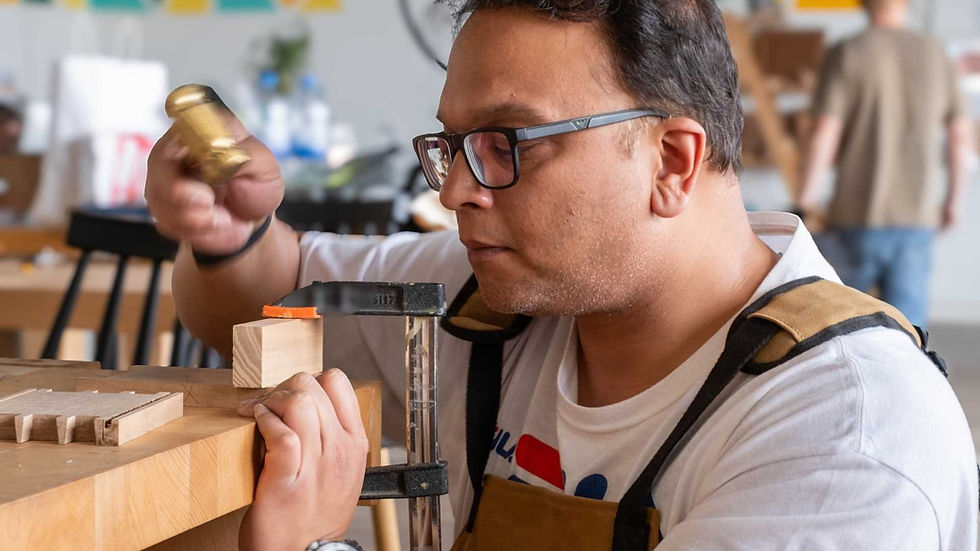
Instead of guessing what to buy, you can start with a thoughtfully prepared Starter Kit.
It includes everything a beginner needs to start woodworking confidently, tested and approved by our tutors. Each item is chosen for quality, usability, and value, from chisels and marking gauges to essential measuring tools.
Our Starter Kit also aligns perfectly with our Courses, ensuring you learn the right techniques with the right tools from day one.
Build Skills First, Then Build Your Workshop
Before filling your shelf with shiny tools, invest in knowledge.
Understanding how wood behaves, how joints fit, and how sharpness affects performance will shape your future as a maker. That’s why many beginners who start with our Hand Tools courses find themselves making cleaner cuts, safer choices, and better projects faster.
Woodworking is not about collecting tools—it’s about mastering the ones you have.
Final Thoughts
When you buy tools wisely, you don’t just save money, you build confidence. Start with a few, high-quality tools, learn how to use and maintain them, and your workshop will grow naturally with your skills.
At The Makers Society, we’re here to help you make every choice count.


Comments